
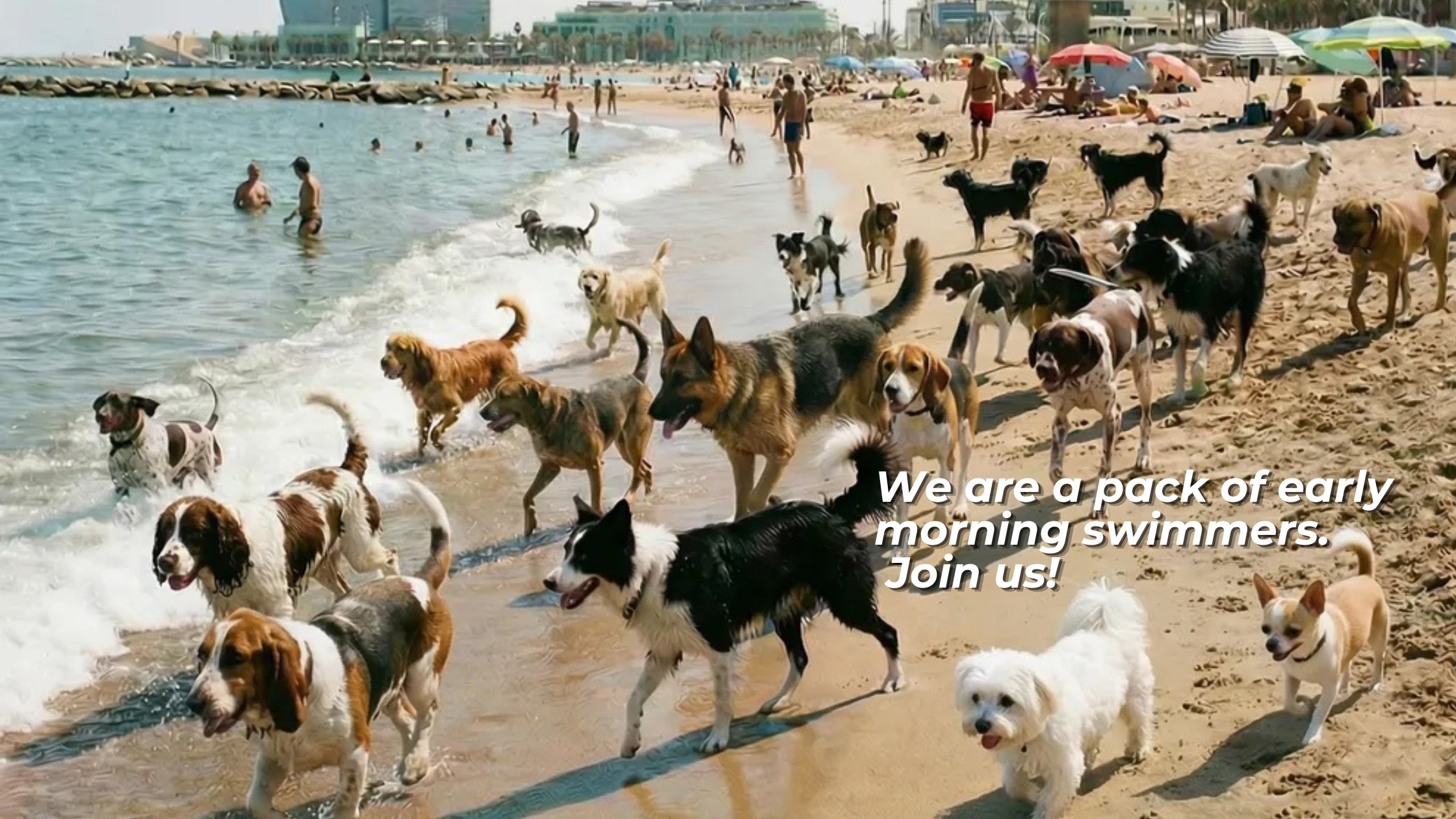
Barcelona has more dogs than children. That’s not a metaphor, it’s a demographic fact that’s quietly reshaping how the city is designed, governed and lived in. But does that make it truly pet-friendly? The honest answer is: it’s getting there. Just not fast enough.
The numbers say yes
The data is genuinely impressive. Barcelona ranks first among Spanish cities for dog owners, scoring 7.38 out of 10 with 273 vets, 556 dog-friendly restaurants and 165 pet-friendly hotels across the city. That’s not nothing. For a Mediterranean metropolis built around density and tourism, it’s actually remarkable.
In recent years, Barcelona has become an increasingly dog-friendly city and you feel it on the ground. Terraces almost always say yes. Gràcia’s plazas fill up on Sunday mornings with locals, coffee, and dogs of every size. The Ciutadella park, the Montjuïc hillside, the seafront all genuinely good for dogs.
Where it still falls short
But spend a year here with a dog, and you’ll notice the gaps.
Green space is the weak point. Only 29% of Barcelona’s surface is green space, well below the European urban average. London has Hyde Park. Berlin has Tiergarten. Barcelona has beautiful parks, but not enough of them per dog per square kilometre.
Off-leash areas are scarce and often poorly maintained. Most designated dog parks (pipicanes) are small, fenced and not exactly inspiring. A dog in Eixample has limited options for a real run outside of early morning sprints on the beach.
Public transport is technically dog-friendly but practically awkward. Dogs are allowed on the metro outside peak hours, leashed and muzzled. In practice, the rules are inconsistently applied and the infrastructure makes it harder than it should be.
Housing remains the biggest blocker. Ask any expat with a dog and they’ll tell you the same thing: finding a rental that accepts dogs is harder than it should be in a city that claims to love them.
What’s changing and why it matters
Cities that get pet-friendly right don’t just make dogs happier. They make people happier too.
Research increasingly shows that urban dog ownership drives neighbourhood cohesion. People stop, talk, connect. Dogs are social infrastructure. And Barcelona, with its tradition of street life and barrio culture, is arguably better positioned than most European cities to build on this.
The signs of change are real. More businesses are proactively welcoming dogs. The tourism board now actively promotes pet-friendly Barcelona. Certain stretches of beach, like Playa de Llevant, now have designated areas for dogs in summer, a shift that would have been unthinkable a decade ago.
The sharing economy is also playing a role. Platforms built around dog care exchange. Neighbours looking after each other’s dogs rather than dropping them at a kennel are quietly building the social infrastructure the city’s parks and policies haven’t quite managed yet.
The verdict
Barcelona is one of the best cities in Europe to live with a dog. It’s warm, it’s walkable, it’s socially accepting of animals in a way that Northern European cities often aren’t.
But «best in Spain» and «truly pet-friendly» aren’t the same thing. The city still needs more green space, better off-leash infrastructure, and housing policies that reflect the reality of dog ownership.
The revolution is underway. It just needs a push.
At Bestiies, we’re building the social infrastructure Barcelona’s dog community needs, one neighbourhood at a time. Join us →

Sources:
Unobravo — Ranking ciudades pet-friendly España 2025
Mawok Dogwear — Top 10 Most Dog-Friendly Cities in the World
Lokafy — Top 5 Dog Friendly Cities to Experience Like a Local
Barcelona Turisme — Pet Friendly Barcelona